

Quantitative Ultrasound-Derived LIID Score Combined with LSM: Noninvasive and Accurate Identification of MASH and Fibrosis Stages in MASLD Patients via iLivTouch
Metabolic dysfunction-associated steatotic liver disease (MASLD) affects approximately 30% of the adult population worldwide. Progression to metabolic dysfunction-associated steatohepatitis (MASH) is significantly associated with elevated risks of cirrhosis, hepatocellular carcinoma, and cardiovascular events. However, the diagnosis of MASH still relies on liver biopsy, which has limitations including invasiveness, high cost, and sampling variability. There is an urgent clinical demand for accurate and accessible noninvasive alternatives. Among various noninvasive techniques, quantitative ultrasound (QUS) provides information on liver tissue microstructure by analyzing raw radiofrequency data. Based on this technology, the research team previously developed a QUS-derived algorithm — the Liver Inflammatory Index (LIID) score — to evaluate MASH in biopsy-proven MASLD patients.
Led by the team of Professor Wei Lai from Beijing Tsinghua Changgung Hospital, Tsinghua University, in collaboration with 10 centers including the team of Professor Zheng Minghua from the First Affiliated Hospital of Wenzhou Medical University (the geographical distribution of each center is shown in Figure 1), the paper Noninvasive Detection of MASH and Fibrotic Burden Using Ultrasound-Derived LIID and LSM in MASLD: A Multicenter Study(Journal of Gastroenterology and Hepatology,JCR Q2,IF=3.8) was published in August 2026. As a multicenter external validation cohort, this study prospectively and retrospectively enrolled 410 biopsy-proven MASLD patients from 10 hospitals across China. All patients underwent examinations using the iLivTouch system (Wuxi Hisky Medical Technologies Co. Ltd., China), with simultaneous acquisition of liver stiffness measurement (LSM), ultrasound attenuation parameter (UAP), and LIID score. With liver biopsy histopathology as the reference standard, the study aimed to evaluate the diagnostic performance of LIID for MASH and the value of LSM for fibrosis staging.
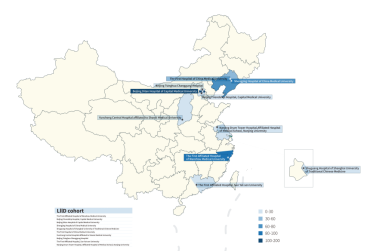
Figure 1 Geographical distribution of participating centers
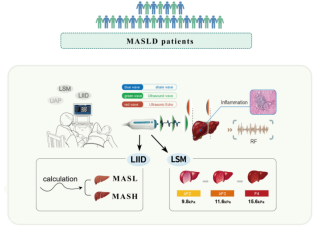
Figure 2 Study summary graph
——————————Interpretation of Study Results————————
LIID Score Effectively Identifies MASH
Ø The AUROC of the LIID score for detecting histologically confirmed MASH was 0.71 (95% CI: 0.66–0.76) (Figure 3A).
Ø Cutoff for ruling out MASH: 6.0, with a sensitivity of 89.6% and a negative predictive value (NPV) of 78.2% (Table 1).
Ø Cutoff for confirming MASH: 7.8, with a sensitivity of 88.4% and a positive predictive value (PPV) of 70.5% (Table 1).
Ø The LIID score was significantly positively correlated with the NAS score (p < 0.01); each 1-point increase in LIID was associated with a 94% higher risk of MASH (OR=1.94).
Ø Compared with other commonly used noninvasive scores (acMASH, AAR, and FIB-4), the LIID score achieved an AUROC of 0.75 (95% CI: 0.69–0.80), versus 0.54 for FIB-4 (95% CI: 0.48–0.60), 0.58 for AAR (95% CI: 0.52–0.64), and 0.71 for acMASH (95% CI: 0.65–0.77). The AUROC of the LIID score was significantly higher than that of FIB-4 and AAR.
Table 1 Characteristics of the two LIID score thresholds
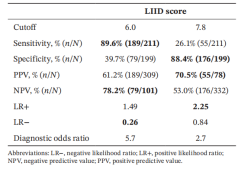

Figure 3 (A) AUROC of the LIID score for the diagnosis of MASH; (B) AUROC of the LSM for the diagnosis of significant fibrosis (≥ F2); (C) AUROC of the LSM for the diagnosis of advanced fibrosis (≥ F3); (D) AUROC of the LSM for the diagnosis of cirrhosis (F4).
LSM Demonstrates Excellent Stratification Capacity for Fibrosis Stages
Ø Significant fibrosis (≥F2): AUROC 0.75 (Table 2, Figure 3B), with an optimal cutoff of 9.8 kPa.
Ø Advanced fibrosis (≥F3): AUROC 0.86 (Table 2, Figure 3C), with an optimal cutoff of 11.6 kPa.
Ø Cirrhosis (F4): AUROC 0.78 (Table 2, Figure 3D), with an optimal cutoff of 15.6 kPa.
Ø Negative predictive value: The NPV for ruling out ≥F3 reached 97.4%, and the NPV for ruling out F4 reached 98.8%.
Ø LSM values increased progressively with advancing fibrosis stage (Table 2, Figure 4B).
Ø In a subgroup of 56 patients, iLivTouch-LSM showed high consistency with measurements from other vibration-controlled transient elastography devices (Spearman ρ = 0.75, p < 0.01), confirming measurement reliability.
Table 2 Optimal cutoff values of LSM
Figure 4 violin plot of LSM versus fibrosis stage.
——————————Summary————————
Based on the iLivTouch system, this study is the first to validate the diagnostic efficacy of the QUS-derived LIID score for MASH in a large multicenter cohort of biopsy-proven MASLD patients (AUROC 0.71). The dual-cutoff strategy (6.0/7.8) balances the needs of screening and confirmatory diagnosis. The study also verified that LSM on the same platform delivers favorable fibrosis stratification performance (AUROC 0.86 for ≥F3). The combination of the two parameters enables simultaneous noninvasive assessment of hepatic inflammatory activity and fibrosis without serological testing, which is expected to substantially reduce the demand for liver biopsy and optimize clinical decision-making workflows. Future efforts should focus on algorithm optimization, expanded validation in MASLD populations with other comorbidities, and exploration of its dynamic value in monitoring treatment response, to advance precise stratified management and early intervention for MASH.
References
[1] Gao F, et al. Noninvasive Detection of MASH and Fibrotic Burden Using Ultrasound-Derived LIID and LSM in MASLD: A Multicenter Study. J Gastroenterol Hepatol. 2026.
